• German
  • English
  • Basket
  • My Account
Verlag Dr. Friedrich Pfeil
  • Shop
  • Backlist
  • Archaeology
    • Books
    • Archaeology – Journals and Series
  • Biology
    • Books
    • Biology – Journals and Series
    • Ichthyological Exploration of Freshwaters
    • Spixiana
  • Geography
  • Geology
    • Books
    • Children’s Books
    • Geology – Journals and Series
  • Ecology
  • Paleontology
    • Books
    • Paleontology – Journals and Series
    • Handbook of Paleoichthyology
  • Other Subjects
    • Philosophy
    • Novels
    • Ethnology
  • E-Book (PDF)
  • About us
  • Booksellers
  • For Authors
  • Contact
  • Menu Menu
  • Shopping Cart Shopping Cart
    0Shopping Cart
  • Link to Facebook
  • Link to X

Search

Search Search
Blick ins Buch:
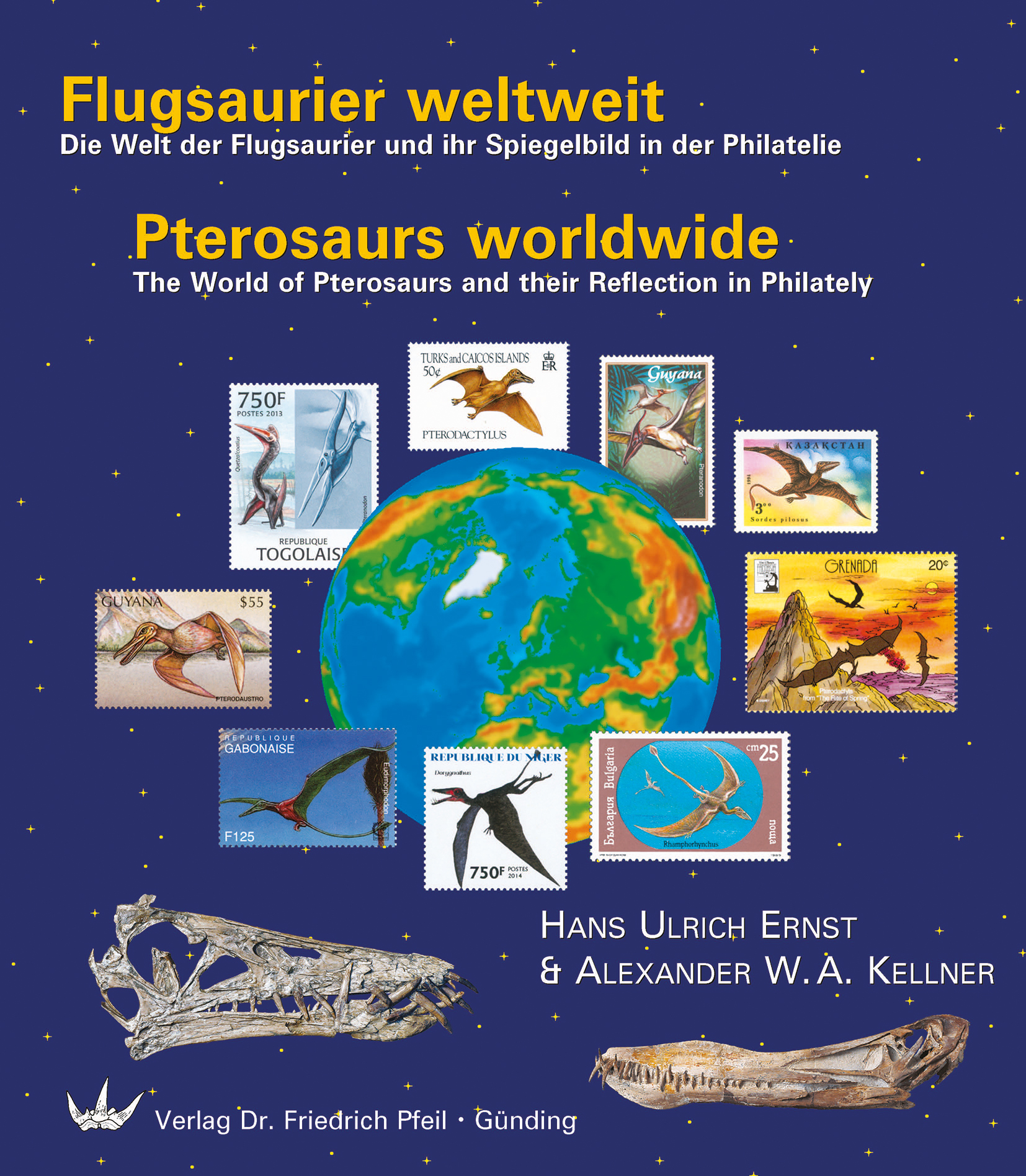
ERNST, Hans Ulrich & KELLNER, Alexander W.A.

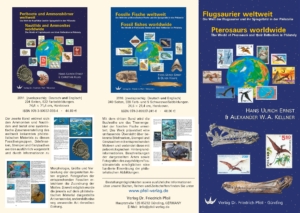
Flugsaurier weltweit – Pterosaurs worldwide

Die Welt der Flugsaurier und ihr Spiegelbild in der Philatelie - The World of Pterosaurs and their Reflection in Philately

2026. [Deutsch and Englisch] – 268 pages, 449 cooured and 7 black-and-white figures.
24,6 × 21,4 cm, Hardcover.

Preorder. This book will be available September 2026.

ISBN: 978-3-89937-314-1
SKU: 978­3­899373141 Categories: Paleontology, Paleontology - Books

50,00 €

plus shipping costs

Two exotic worlds meet: Like its three predecessors on trilobites, cephalopods and fossil fishes, this book is aimed at both philatelists and fossil collectors. It gives an extensive overview stamps, postmarks and postal stationeries with the motif pterosaurs known so far. In addition, the book provides a brief description of the morphology, way of life, size and distribution of the pterosaurs depicted on the philatelic material, including pictures of the fossil material for reference.


  • Preface
  • Introduction
  • Contents
  • Authors
  • Reviews
  • Review Copy

With the present book The World of Pterosaurs and their Reflection in Philately this volume is being presented here as the fourth edition of a series, published by the Dr. Friedrich Pfeil Verlag, following the ones about fossil trilobites, cephalopods and fishes. The stamps and related postal stationary showing pterosaurs are arranged according to a systematic scheme of pterosaurs as is generally accepted by paleontologists. Included are  illustrations of the original fossil specimens in combination with the corresponding images on the stamps. They are supplemented by detailed philatelistic and paleontological descriptions.

During the biological evolution three groups of vertebrates have developed aktive flight:  pterosaurs, birds and bats. The ability to fly has been achieved independantly from each other, quite differently, at different times and in this sequence. In pterosaurs active flight evolved as early as in the Triassic, more than 200 million years ago. That means that they could move in aerial environments navigating under control and fully orientated. This required highly developed neural, respiratory and metabolic structures, thus an advanced   physiology. Therefore, compared to living reptiles, as tortoises, crocodiles or lizards, pterosaurs take a special position within the vertebrate system. They are not considered to be closely related to their contemporaries, the dinosaurs. So, the characterization of pterosaurs as “Flying Dinosaurs”, as indicated on some postal stamp editions, is not correct. Neither the ancestral origin of the pterosaurs nor any closer relationships to other reptilian groups could be found so far. Until now there is no “missing link” in their evolutionary history as in birds with the famous Archaeopteryx.

We would know nothing about these interesting and fascinating flying animals of the geological past without their fossil remains and the scientific research of generations of paleontologists. First discovered in the quarries of Solnhofen limestones in Southern Germany at the end of the 18th century quite a number of pterosaur specimens have been discovered around the world. They existed almost during the entire Mesozoic period for more than 150 million years. Nevertheless, pterosaur fossils are relatively rare. For those terrestrial flying animals there was little chance of getting preserved as fossils. In mostcases they originate from deposits of former lake or marine coastal sediments such as the Solnhofen limestones or the lacustrine rocks of Northeast China. Usually only the bones of the skeleton are preserved in mineralized mattter. Sometimes impressions of the flight membrane and body covering provide some informations about flight performance and physiology. Pterosaurs have a unique wing anatomy different from the ones of birds and bats. The skeletal flight apparatus has a significant charkteristic as one of the manual fingers is extremely elongated and strengthened. To this digit a skin membrane was attached extending to the body flanks and hind legs forming the wing. Elements of the shoulder girdle suggest that they must have been skilled and powerful flying animals.

The oldest fossil remains of pterosaurs have been discovered in 220 million years old rocks in Northern Italy. They dominated the air without competition until the late Jurassic, for almost 70 million years. Their first competitors, the birds, were not to appear until 150 million years ago, represented by Archaeopteryx in the Jurassic Solnhofen lithographic limestone. At the end of the Cretaceous some pterosaurs reached enormous dimensions with wing spans of more than 11 meters. Fossils of these largest flying creatures of all times, such as the famous Quetzalcoatlus, were excavated from rocks in the region which is now West Texas, USA. At the turn of the Cretaceous to the Tertiary, about 65 million years ago, the last pterosaurs became extinct along with the dinosaurs and many other animal groups. With regard to their popularity, pterosaurs remained in the “shadow of the dinosaurs” for long time, as is shown by so many stamps with dinosaurs. However, since the 1970ies new excavations and exciting discoveries of pterosaur fossils found their reflections in popular books, films and the media. This attraction in the general public was followed by the issue of special stamps with pterosaur motives by many postal authorities around the world.

With the present book both stamp collectors and hobby paleontologists will have the advantage of getting an informative work of reference.

Dr. Peter Wellnhofer, February 2023 

Curator Emeritus, Bavarian State Collection of Paleontology and Geology, Munich
Since the mid 1980s, due to the dinosaur boom, stamps showing fossils have become very popular among stamp collectors. Despite this interest, literature providing philatelic information combined with detailed background on the depicted subject is scarce. Short thematic publications are found in non-German-speaking countries, mainly coming from the USA, Canada, and within Europe especially from Great Britain and the Netherlands. Regarding extinct organisms, dinosaurs are by far the most portrayed motifs, making up considerably more than half of all stamps showing fossils.

Popular science publications focusing on paleontology are on the rise in German philately. LORENZ (1989) has presented a detailed publication about minerals and fossils on Helvetian postal stamps (“Pro Patria” series) and recently he wrote about the fossil flora on postal documents (LORENZ 2003, 2004). Descriptions of scientific context and characteristics of specific postage stamps were made by HAMPE (1989) about fossil amphibians, and by SCHULTZE & HAMPE (2001) about fossil bony fish (Osteichtyes). SPINDLER (2007) published a brief account on pterosaurs, showing a limited number of stamps from a private collection. HAMPE (2009a, b) presented fossil whales and their morphologically and molecularly close relatives figured in philatelic products and discussed the history and sites connected with fossils from the inventory of the vertebrate paleontological collection of the Museum für Naturkunde Berlin. Starting with a volume on trilobites, ERNST & RUDOLPH (2002) presented a series of thematic books with extensive background information, which, in addition to postage stamps, also included postmarks and postal stationery of fossils. Two additional philatelic publications, one on ammonites and nautilids (ERNST & KLUG 2011) and a second one on prehistoric fish (ERNST & HAMPE 2018) followed.

As in the three latter publications (about trilobites, cephalopods, and fossil fishes), two exotic worlds meet in this new volume: fossil collectors and philatelists, both representing rather rare species. We hope to inspire both groups by providing an extensive overview of stamps, postmarks and stationeries featuring the world of pterosaurs, who were the first vertebrates to conquer the skies during the Mesozoic Era. We also took the opportunity to provide brief information on some aspects of each of the portrayed species, such as appearance, way of life, size, and distribution, including a picture or drawing of original fossil material. Therefore, this book is addressed to both, readers interested in philately as well as hobby paleontologists.

All stamps, postmarks and stationaries that were issued until December 2019 have been considered. Yet, despite our effort to cover everything until this date, it is entirely possible that some have escaped us, particularly since some might have been issued after the manuscript was finished. Older stationaries and postmarks issued in Asia are quite often discovered long time after their date of first issue. In such case we would greatly appreciate it if the reader could inform us for completing or correcting this in a later issue.

In order to keep images to a reasonable number, the philatelic illustrations were limited to a maximum of twenty per pterosaur species. If the date of the first issue presented is only restricted to a year, that means that these stamps are not yet present in the Michel Catalog or in the Michel-Rundschau.

For classification of each taxon we have relied on previous publications with the knowledge that our understanding of pterosaur interrelationships is in its infancy and lots might change before a nomenclatural stability is achieved, particularly concerning suprageneric clades (e. g., families).

We are indebted to the late K. H. Schumacher, who made his pterosaur collection available for scanning, and also Ms. Zabold for reviewing the manuscript.

Hans Ulrich Ernst, Pressel,

Alexander W. A. Kellner, Rio de Janeiro,

December of 2022

Vorwort/Preface 5
Einleitung/Introduction 8
Flugsaurier: Ursprung und Lebensweise/Pterosaurs: Origin and Behavior 10
Flugsaurierarten oder -gattungen/Pterosaur species or genera 19
Anurognathus ammoni 19
Batrachognathus volans 26
Sordes pilosus 29
Preondactylus buffarinii 37
Scaphognathus crassirostris 41
Dorygnathus banthensis 46
Dimorphodon macronyx 48
Dimorphodon sp. 58
Peteinosaurus zambelli 58
Raeticodactylus filisurensis 65
Caviramus schesaplanensis 68
Arcticodactylus cromptonellus 70
Eudimorphodon ranzii 71
Campylognathoides sp. 79
Harpactognathus gentryii 80
Angustinaripterus longicephalus 82
Rhamphorhynchus longicaudus 83
Rhamphorhynchus muensteri 85
Rhamphorhynchus etchesi 87
Rhamphorhynchus sp. 89
Darwinopterus linglongtaensis 95
Darwinopterus modularis 97
Kryptodrakon progenitor 99
Zhenyuanopterus longirostris 101
Germanodactylus sp. 103
Pterodactylus antiquus 104
Pterodactylus kochi 106
Pterodactylus sp. 108
Gallodactylus canjuersensis 117
Feilongus youngi 118
Gegepterus change 120
Ctenochasma roemeri 122
Huanhepterus quingyangensis 123
Pterodaustro guinazui 125
Nyctosauridae gen. et sp. nov. 130
Nyctosaurus sp. 132
Muzquizopteryx coahuilensis 133
Nemicolopterus crypticus 134
Haopterus gracilis 137
Istiodactylus latidens 140
Aussiedraco molnari 143
Ornithocheirus simus 147
Cearadactylus atrox 151
Ludodactylus sibbicki 154
Tropeognathus mesembrinus 156
Caulkicephalus trimicrodon 164
Liaoningopterus gui 165
Anhanguera blittersdorffi 167
Anhanguera piscator 169
Anhanguera sp. 171
Pteranodon longiceps 174
Dawndraco kanzai 182
Geosternbergia sternbergi 184
Dsungaripterus weii 186
Noripterus complicidens 191
Thalassodromeus sethi 193
Tupandactylus imperator 196
Tupandactylus navigans 198
Tapejara wellnhoferi 200
Caiuajara dobruskii 203
Sinopterus dongi 205
Bakonydraco galaczi 207
Caupedactylus ybaka 209
Lacusovagus magnificens 210
Alanqa saharica 211
Zhejiangopterus linhaiensis 212
Arambourgiania philadelphiae 214
Hatzegopteryx thambema 215
Azhdarcho lancicollis 217
Quetzalcoatlus northropi 218
Quetzalcoatlus lawsone 225
Mesadactylus ornithosphyos 226
Stilisierte & unbestimmbare Flugsaurier/ Stylized & indefinable pterosaurs 228
Flugsaurier und Comics/Pterosaurs and cartoons 228
Nomen nudum: Ditomopharangia 232
Literaturverzeichnis/References 234
Philatelie und Geschichte/philately and history 234
Paläontologie und Zoologie/Palaeontology and Zoology 234
Abbildungsverzeichnis/List of figures 238
Liste der Abkürzungen/List of abbreviations 238
Tabelle: Liste der Marken und Belege/List of stamps and supporting documents 238
Appendix 267

Dr. med. Hans Ulrich Ernst, born 1949, studied medicine in Cologne and was head physician at a specialist clinic for orthopedic rehabilitation. He retired in January 2013. He has been collecting stamps since his school days, including the motif “fossils”. In recent years he has also become engaged with the fossils themselves and has begun to build a paleontological collection.

Dr. Alexander W. A. Kellner, born 1961, graduated in geology (1985) and earned a Ph.D. (1996) degree from Columbia University. Since 1997, he works at the Museu Nacional/UFRJ, where he presently serves as the director. His main field is Paleontology, having organized or taken part in several paleontological expeditions around the globe, including the deserts of Atacama (Chile) and Kerman (Iran), the famous deposits of Liaoning (China), and Antarctica. His scientific achievements resulted in the descriptions of 90 species, including several pterosaurs that are illustrated in this book.

Reviews

There are no reviews yet.

Be the first to review “Flugsaurier weltweit – Pterosaurs worldwide” Cancel reply

You must be logged in to post a review.

"*" indicates required fields

Name*
Email*
Address*
Consent*

Related products

  • Las Hoyas: A Cretaceous Wetland

    75,00 €

    plus shipping costs

  • Mesozoic Fishes 1 – Systematics and Paleoecology

    90,00 €

    plus shipping costs

  • Recent Advances

    240,00 €

    plus shipping costs

  • Mesozoic Fishes 4 – Homology and Phylogeny

    180,00 €

    plus shipping costs

  • HPI 3D • Chondrichthyes – Paleozoic Elasmobranchii: Teeth

    120,00 €

    plus shipping costs

We’re here for you

Verlag Dr. Friedrich Pfeil
Hauptstraße 12B
5232 Bergkirchen OT Günding – Germany

Tel.: +49 8131 61 46 590
Fax: +49 8131 61 46 591
E-Mail: info@pfeil-verlag.de

Hauptstraße 12B - 85232 Bergkirchen OT Günding - Germany - Tel.: +49 8131 61 46 590 - Fax: +49 8131 61 46 591 - E-Mail: info@pfeil-verlag.de

Contact

Tel.: +49 89 742827-0
Fax: +49 89 7242772
E-Mail: info@pfeil-verlag.de

© 2023 Verlag Dr. Friedrich Pfeil - Alle Rechte vorbehalten - Kontakt - Impressum - Datenschutzerklärung
Scroll to top Scroll to top Scroll to top

Unsere Webseite verwendet erforderliche Cookies. Durch das Akzeptieren dieser Cookies sorgen Sie dafür, dass bei Ihrem Besuch alle Services sicher, stabil und reibungslos funktionieren. Die Verarbeitung Ihrer Daten erfolgt in Übereinstimmung mit unseren Datenschutz-Richtlinien

AkzeptierenNur essentielle CookiesEinstellungen

Cookies und Datenschutz-Einstellungen


Was sind Cookies?

Auf unserer Website verwenden wir sogenannte Cookies. Bei Cookies handelt es sich um Textdateien, die im Internetbrowser bzw. vom Internetbrowser auf dem Computersystem des Nutzers gespeichert werden, sobald ein Nutzer unsere Website aufruft. Cookies enthalten charakteristische Zeichenfolgen, die eine eindeutige Identifizierung des Browsers beim erneuten Aufrufen der Website ermöglichen.

Wir setzen Cookies ein, um unsere Website nutzerfreundlicher und sicher zu gestalten. Einige Seitenelemente unserer Website machen es erforderlich, dass der aufrufende Internetbrowser auch nach einem Seitenwechsel innerhalb unserer Website identifiziert werden kann.

Notwendige Cookies

Der Zweck der Verwendung technisch notwendiger Cookies ist es, die Nutzung von Websites für die Nutzer zu vereinfachen. Einige Funktionen unserer Internetseite können ohne den Einsatz von Cookies nicht angeboten werden. Für diese ist es erforderlich, dass der Internetbrowser auch nach einem Seitenwechsel wiedererkannt wird. In diesen technisch notwendigen Cookies werden Daten erhoben, gespeichert und an uns übermittelt, um den Abruf unserer Website aus der Datenbank zu ermöglichen.

Web Analytics

Wir setzen keinerlei fremde Dienste zur Analyse Ihres Surfverhaltens ein.

Unser Hostingprovider wertet von Zeit zu Zeit die erfolgten Zugriffe mithilfe von Werkzeugen aus, die auf die ohnehin anfallenden Serverlogfiles zugreifen. Diese Auswertung erfolgt ausschließlich anonymisiert und dient lediglich der Optimierung unserer Webdienste und der Server selbst.

Andere externe Dienste

Wir verwenden verschiedene externe Dienste wie z.B. Bayernatlas. Deren Anbieter sammeln möglicherweise personenbezogene Daten wie Ihre IP-Adresse.

Datenschutzerklärung

Wir bemühen uns, eine einfache und gut beschriebene Datenschutzerklärung bereitzustellen. Wir finden Datenschutz äußerst wichtig und wollen genau erklären, wie sorgsam wir mit Ihren Daten umgehen. Unsere Datenschutzerklärung finden Sie hier:

Datenschutzerklärung
AkzeptierenNur essentielle